TMAG Hobart: Tasmanian Museum and Art Gallery Visitor Guide
TMAG is free to enter and genuinely hard to leave quickly. More than a million objects — from a prehistoric woolly mammoth tusk to contemporary works by living Tasmanian artists — fill a city block of historic buildings that are themselves worth the visit. The oldest dates to 1808, making it Tasmania's oldest surviving public building. The collection spans natural history, Indigenous Tasmanian culture, colonial history, and contemporary art, all tied together into a distinctively Tasmanian story that no other institution tells quite the same way.
An Experience That Starts Before You Walk In
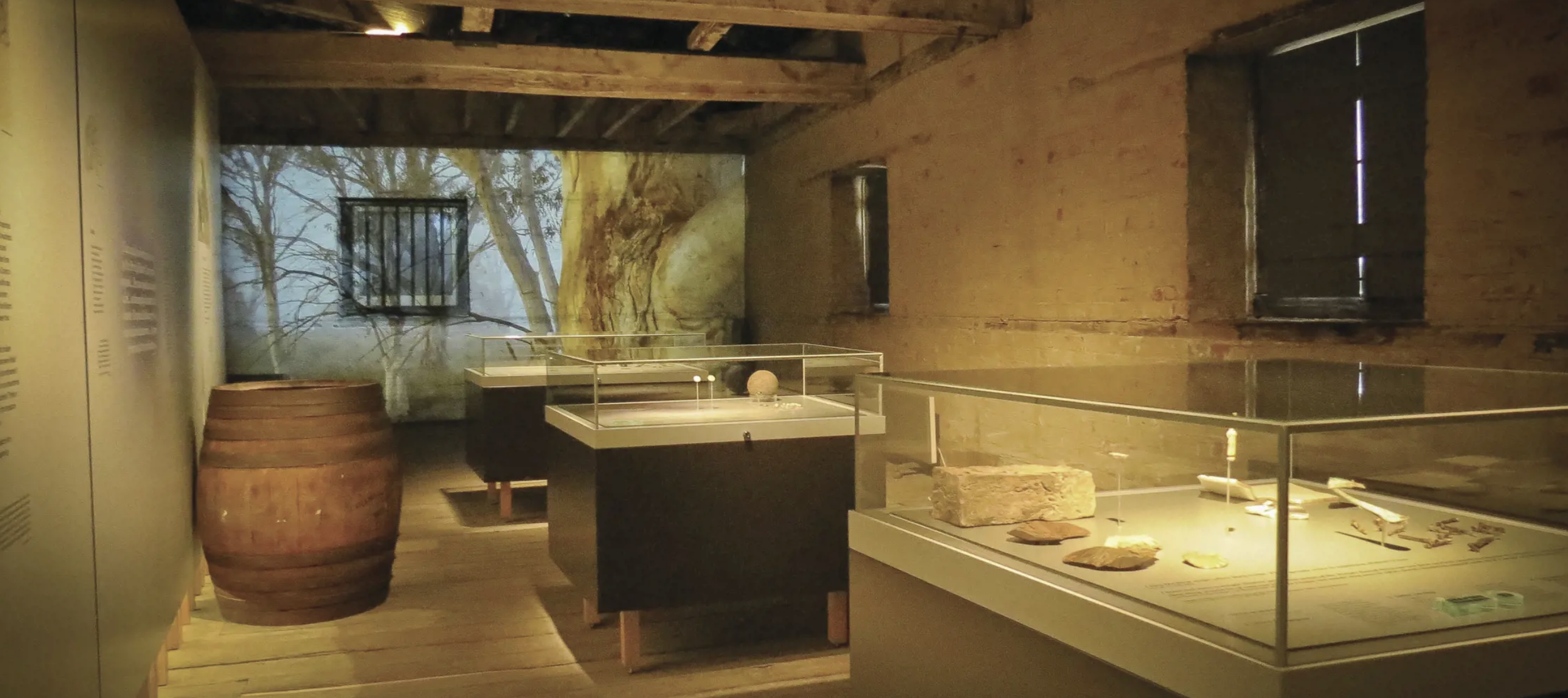
Some of Australia's finest museums announce themselves from a great distance. The Tasmanian Museum and Art Gallery does something subtler and, in many ways, more effective: it begins before you notice it has begun. The collection of Georgian and colonial-era buildings that house TMAG — spread across an entire city block between Argyle and Macquarie streets, a short walk from Hobart's waterfront precinct — are themselves among the most historically significant surviving public structures in the country.
The Royal Society of Tasmania: Australia's Oldest Scientific Society
The institution traces its origins to the Royal Society of Tasmania, established in 1843 as Australia's oldest scientific society, founded on the premise that the natural world of this remote island deserved serious, sustained, and methodical documentation. The Society's early collections of botanical specimens, geological samples, and zoological material formed the nucleus of what would eventually grow into a collection numbering over one million individual objects.
Heritage Architecture: Commissariat Store, Cottage and Custom House
The buildings themselves deserve as much careful attention as the objects they contain. The Commissariat Store, constructed between 1808 and 1810, is Tasmania's oldest surviving public building. The Private Secretary's Cottage, built before 1815, stands nearby. The 1902 Custom House, which served as Tasmania's first federal government building following Federation, completes a heritage precinct that functions simultaneously as a living museum and an architectural record of the island's progression from penal colony to self-governing state.
Exploring the Collections
Natural History: Thylacine, Geology and Polar Expeditions
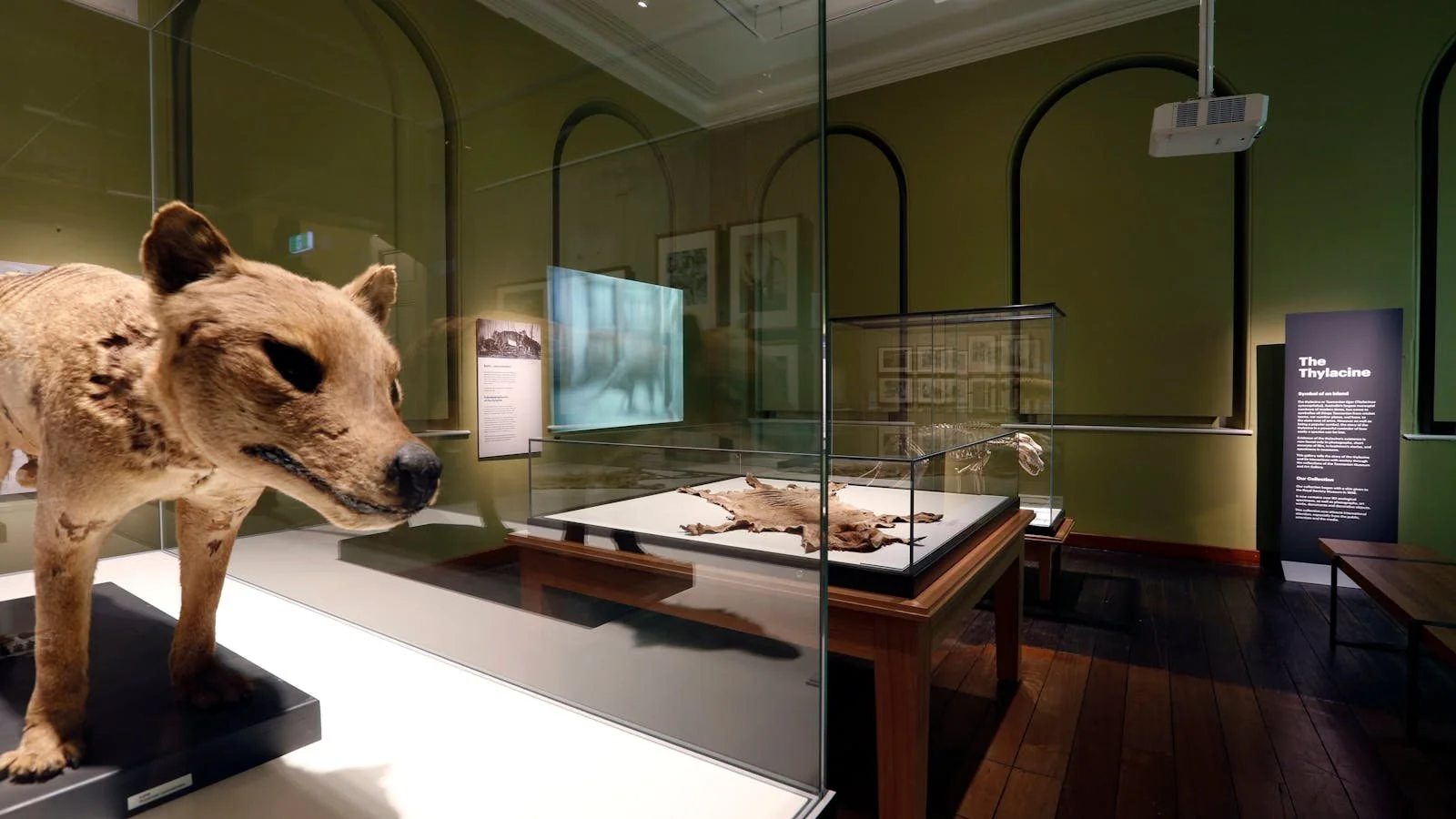
Inside, the collections navigate the difficult balance between scientific rigour and genuinely accessible presentation. Natural history is a particular strength: TMAG holds exceptional collections of Tasmanian fauna, including significant specimens of the thylacine — the Tasmanian tiger — that serve as a sobering record of the species's twentieth-century extinction. Geological displays, polar expedition artefacts, and maritime collections round out the scientific holdings, all presented with clarity and intellectual care.
Art Gallery: Colonial Paintings to Living Tasmanian Artists
The art collection is equally rewarding. Works by Tasmanian artists from colonial-era landscape paintings to contemporary installations sit alongside significant pieces from mainland Australia and international collections. The gallery actively acquires work by living Tasmanian artists, meaning the collection feels current and locally grounded. Visiting TMAG after a day at MONA provides a genuinely illuminating counterpoint: the two institutions tell very different stories about what art is for and who it is meant to reach.
Visiting TMAG: Location, Hours and Entry
Free Entry and a Short Walk from CBD Properties
TMAG is free to enter, which removes any financial calculation from the visit and allows the kind of unhurried engagement that museums of this quality genuinely deserve. Many guests at The Royale (Hobart CBD) and The District (Hobart CBD) find themselves returning more than once over a longer stay — the collection is deep enough that a second visit reliably reveals entire rooms missed entirely on the first.
Both The Royale and The District are within an eight-minute walk of TMAG's main entrance on Argyle Street. Guests at The Tempo (Sandy Bay) and The Helm (Sandy Bay) are around ten minutes by car. The museum is open Tuesday through Sunday, with extended hours during significant temporary exhibitions and the summer festival season.
Combining TMAG with Salamanca and the Waterfront
A short walk downhill from TMAG brings you to Salamanca Place and the heritage precinct, where the Salamanca Markets operate every Saturday morning. Combining a morning at the markets with an afternoon at TMAG is a natural pairing both are free, both are walkable from the CBD properties, and both reward slow, attentive engagement.
Events, Exhibitions and the Cultural Calendar
TMAG plays an active role in Hobart's broader cultural calendar beyond its permanent galleries. The museum hosts significant temporary exhibitions throughout the year and regular public programming including lectures, specialist tours, workshops, and after-hours events. The winter Dark Mofo festival frequently involves TMAG as a venue and partner, making a mid-winter Hobart visit a particularly rich experience across multiple cultural institutions.
Few cities of Hobart's scale offer a free public museum of this quality — so centrally located, so well staffed, and so genuinely representative of a place's particular cultural and natural identity. For guests exploring the neighbourhood around The Island Collective properties, TMAG is simply not to be missed.