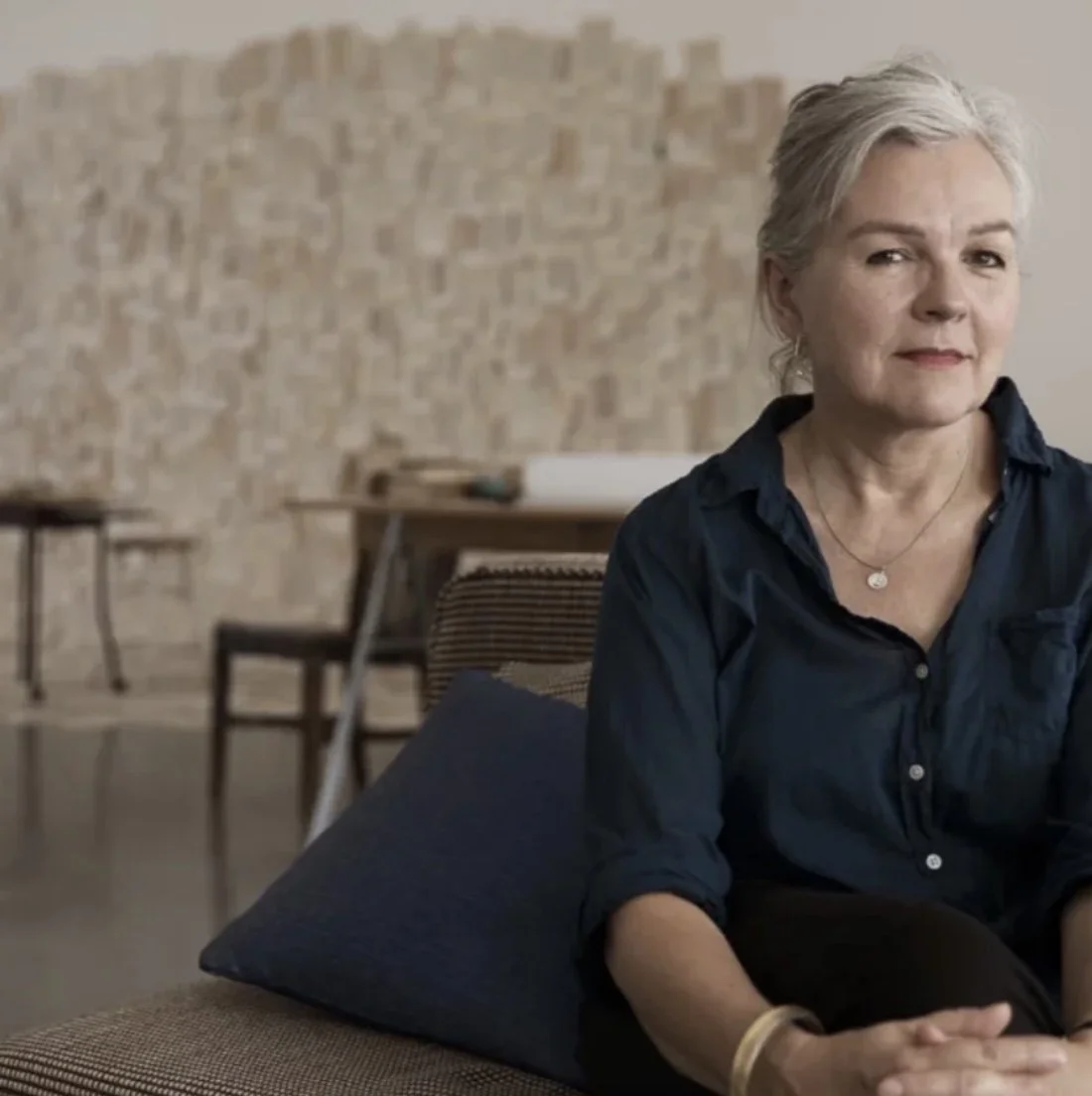
Brigita Ozolins is an artist and Adjunct Senior Lecturer at the School of Creative Arts and Media, at the University of Tasmania, where she has been teaching since 2000.
Her heritage is Latvian, and she moved from Melbourne to Hobart in 1983.
Brigita Ozolins - Unity
Exhibited at Bett Gallery 29 April – 16 May 2016
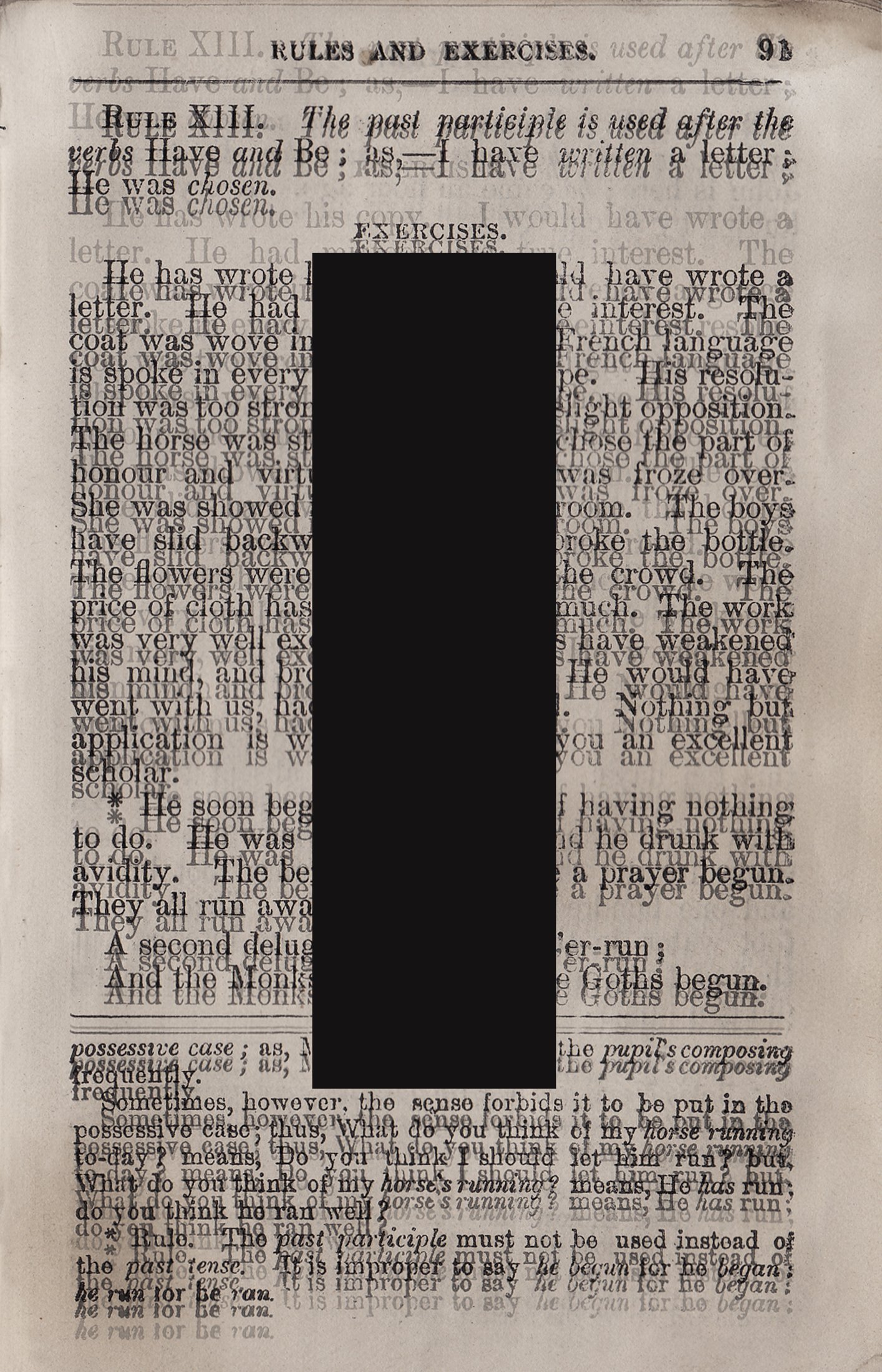
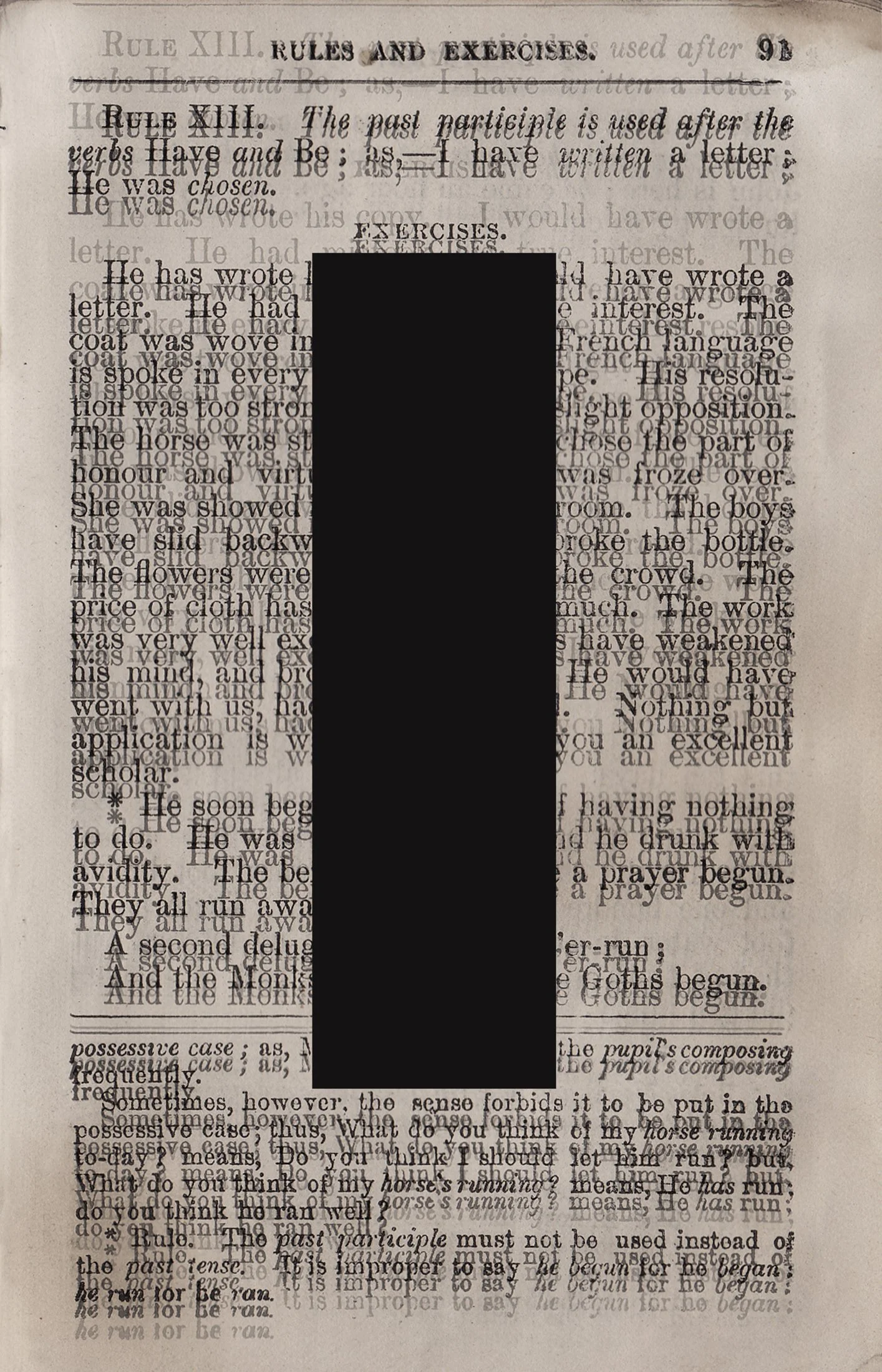
Artworks: Rule XII & Rule XIII
Unity is a visual exploration of two numbers – zero and one – that make up binary code
and are the basis for all digital information. Binary code is a system for the
representation of reality that uses two symbols that are opposite. It represents words,
images, music - everything we engage with digitally. I have been drawn to the minimal
beauty of these two symbols that seem in opposition to each other, but through
unification become more than the sum of their parts.
The work is an extension of concepts that I began to explore in previous installations, in
particular Kryptos (2011) and Codex (2009), both of which examine our complex
relationship to language and to codification. These works are also about an essential
mystery associated with the process of writing, of recording our thinking about what it is
to be in the world. Unity also aims to evoke a sense of mystery, and to reflect on the
transformation of the process of writing from analogue to digital. It juxtaposes a series of
opposites: numbers and letters, philosophy and mathematics, nature and culture, the
organic and inorganic, and the old and the new.
Unity has been inspired by the history of binary code. Some historian relate the
emergence of binary code back back to the prosody of Indian Vedic chanting, as outlined
by the ancient Indian scholar Pingala, who explains the rhythm of Vedic verse using a
binary system of light and heavy syllables. Others establish links between binary code and
the ancient Chinese method of divination called the I Ching, or Book of Changes, which is
based on interpreting hexagrams of broken or unbroken horizontal lines and the pairing
of the opposites yin and yang.
Gottfried Wilhelm Leibniz (1646-1716), a renowned German polymath with particular
interests in philosophy and mathematics, is generally accredited with being the father of
binary code. He was initially inspired by the I Ching when he developed the system that
today forms the basis of all digital computing. An extraordinary scholar, he made
significance contributions to many fields of study including physics, probability theory,
biology, medicine, geology, philosophy and linguistics. He invented the first mass-
produced mechanical calculator, called the Leibniz wheel, and refined the binary number
system that we use today. Quotes from his philosophical texts have been incorporated
into the digital prints that are part of the Unity exhibition.
There is nothing without a reason.
There are two kinds of truths: those of reasoning and those of fact.
Everything that is possible demands to exist.
The present is pregnant with the future.
We can only see a short distance ahead.
Every substance is as a world apart...
As well as the philosophical statements of Leibniz, the works in Unity incorporate quotes
from more contemporary writers that reference our relationship to books, words, writingand knowledge. These include Tasmanian author Richard Flannagan, French writer
Marguerite Duras, and the French philosophers Giles Deleuze and Felix Guattari.
There are words and words and none mean anything. (Richard
Flannagan)
The unity of language is fundamentally political. (Deleuze and Guattari)
The self is only a threshold... (Deleuze and Guattari)
The tree imposes the verb “to be”. (Deleuze and Guattari) Around us, everything is
writing. (Marguerite Duras)
One is never alone. (Marguerite Duras)